
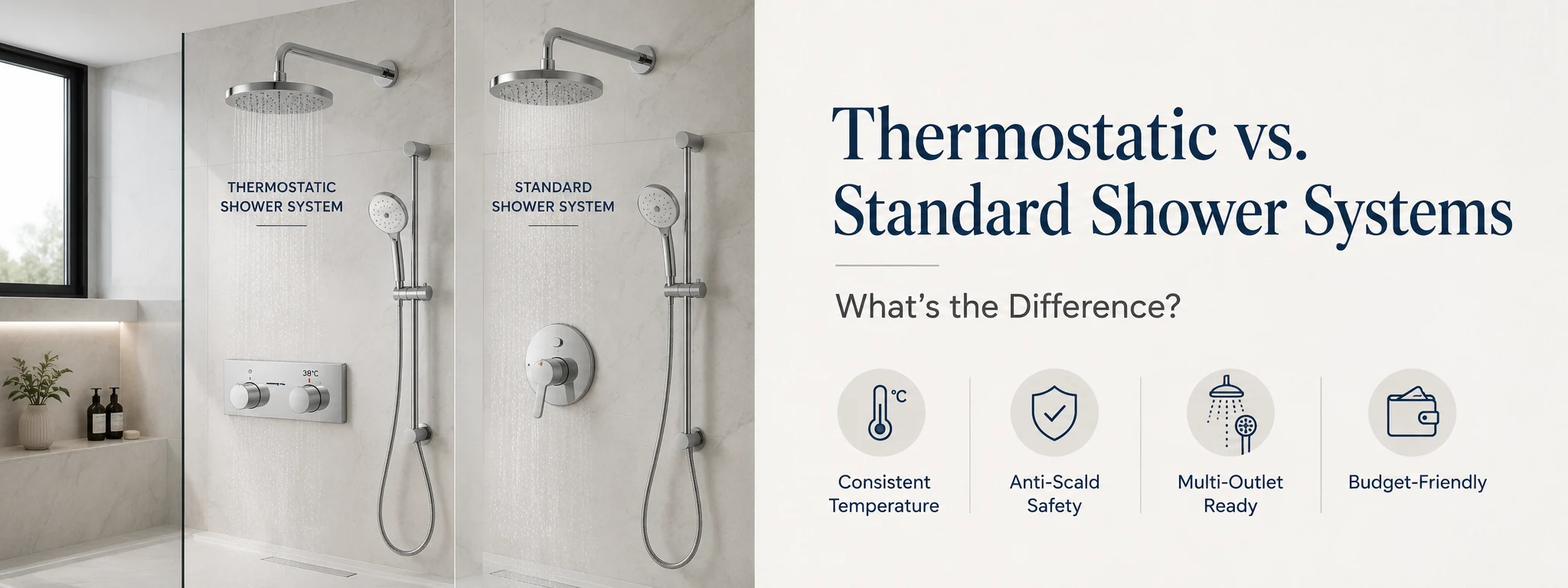
Thermostatic vs Standard Shower Systems: What’s the Difference?
We Make Luxury AffordableAugust 12, 2026
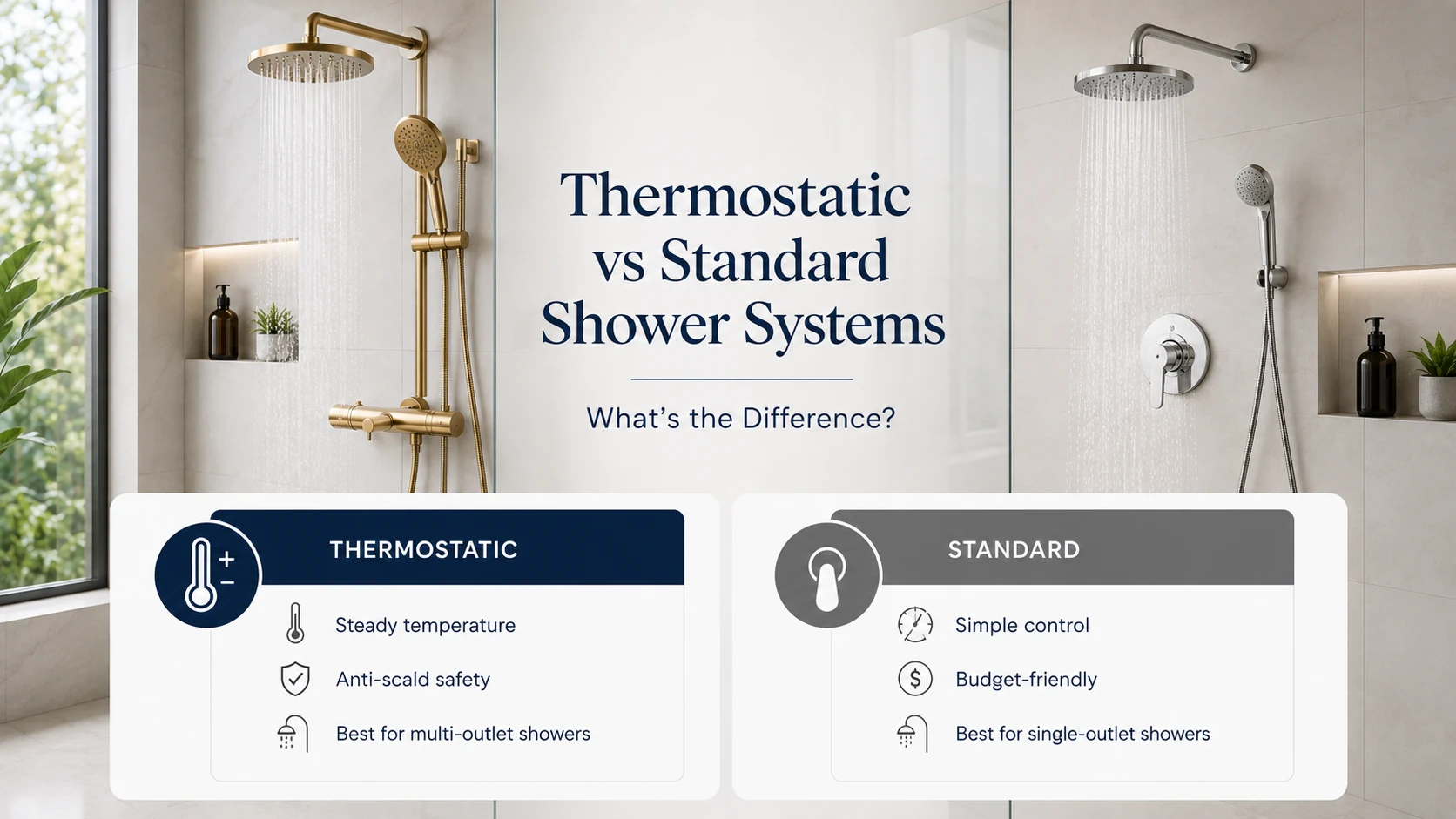
Thermostatic vs Standard Shower Systems: What’s the Difference?
If you’ve ever had your shower suddenly run scalding hot because someone flushed a toilet elsewhere in the house, you already understand the appeal of a thermostatic shower system. But is the upgrade worth it over a standard shower valve? The answer depends on how much you value consistent temperature control versus a simpler, more budget-friendly setup.
At Bliss Bath and Kitchen, we carry both thermostatic and standard shower systems from brands like Riobel, Grohe, and Tenzo. Here’s how the two types actually differ.
Quick Comparison at a Glance
| Feature | Thermostatic Shower System | Standard Shower System |
|---|---|---|
| Temperature control | Maintains a set, consistent temperature automatically | Manual — adjusts with a single lever or knob |
| Protection from pressure changes | Yes, compensates automatically | No, temperature can fluctuate |
| Number of controls | Separate temperature and volume controls | Single control for both |
| Safety | Built-in anti-scald protection | Depends on the valve’s pressure-balance rating |
| Cost | Higher, more complex valve | Lower, simpler mechanism |
| Best for | Multi-outlet showers, households with kids or elderly users | Simple single-outlet showers, budget renovations |
How Thermostatic Shower Systems Work
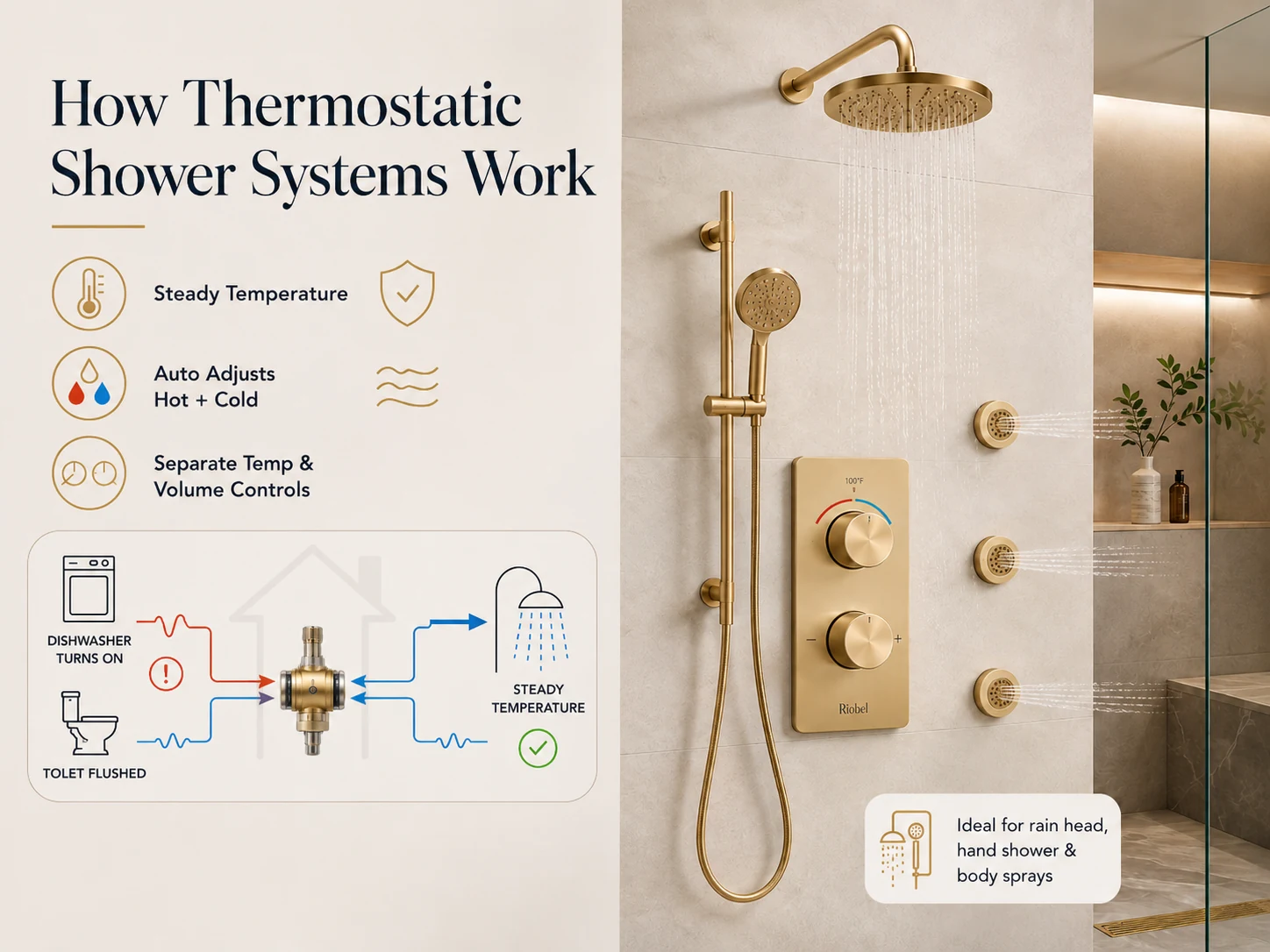
A thermostatic valve uses an internal element that constantly monitors incoming water temperature and adjusts the mix of hot and cold automatically to hold a steady, pre-set temperature. If someone runs the dishwasher or flushes a toilet elsewhere in the house, a thermostatic system compensates instantly, so the shower temperature doesn’t spike or drop. Most thermostatic systems also separate temperature and volume into two distinct controls, giving you precise control over both.
Riobel makes a strong range of thermostatic shower systems with multi-outlet configurations for rain heads, hand showers, and body sprays.
Tenzo AirBoost: A Different Approach to Water Pressure
Tenzo takes a different angle on the shower experience with its AirBoost technology, an air-injection system built into select luxury shower heads. Rather than relying purely on water volume, AirBoost blends air into the water stream, which noticeably boosts how powerful the spray feels without increasing actual water usage. It’s a smart pairing with a thermostatic valve — you get consistent temperature control from the valve and a stronger-feeling spray from the shower head, all while keeping water consumption efficient.
How Standard Shower Systems Work
A standard shower system typically uses a single-handle pressure-balance valve, which adjusts water pressure to help limit temperature swings but doesn’t actively hold a set temperature the way a thermostatic valve does. It’s simpler mechanically, which keeps the cost down and makes it a reliable choice for single-outlet showers where multiple water sources aren’t competing for pressure.
Grohe offers a strong range of standard pressure-balance shower systems that suit most everyday bathroom setups.
Safety and Household Considerations
Thermostatic systems have a real advantage for households with young children, elderly family members, or anyone more sensitive to sudden temperature changes, since the built-in anti-scald protection prevents dangerous spikes. This is one of the more practical, not just luxury, reasons homeowners upgrade.
Complexity and Multi-Outlet Showers
If your shower design includes multiple outlets — a rain showerhead, a hand shower, and body sprays running together — a thermostatic system is generally the better fit, since it can maintain a consistent temperature even as volume demand changes across outlets. Standard systems can struggle to keep up in these multi-outlet setups.
Cost Considerations
Thermostatic valves cost more upfront due to their more complex internal mechanism, and installation can be slightly more involved. Standard shower systems remain the more budget-friendly option, particularly for simpler, single-outlet showers. Adding a Tenzo AirBoost shower head to either setup is a relatively affordable way to upgrade the feel of your shower without a full valve replacement.
Which Shower System Should You Choose?
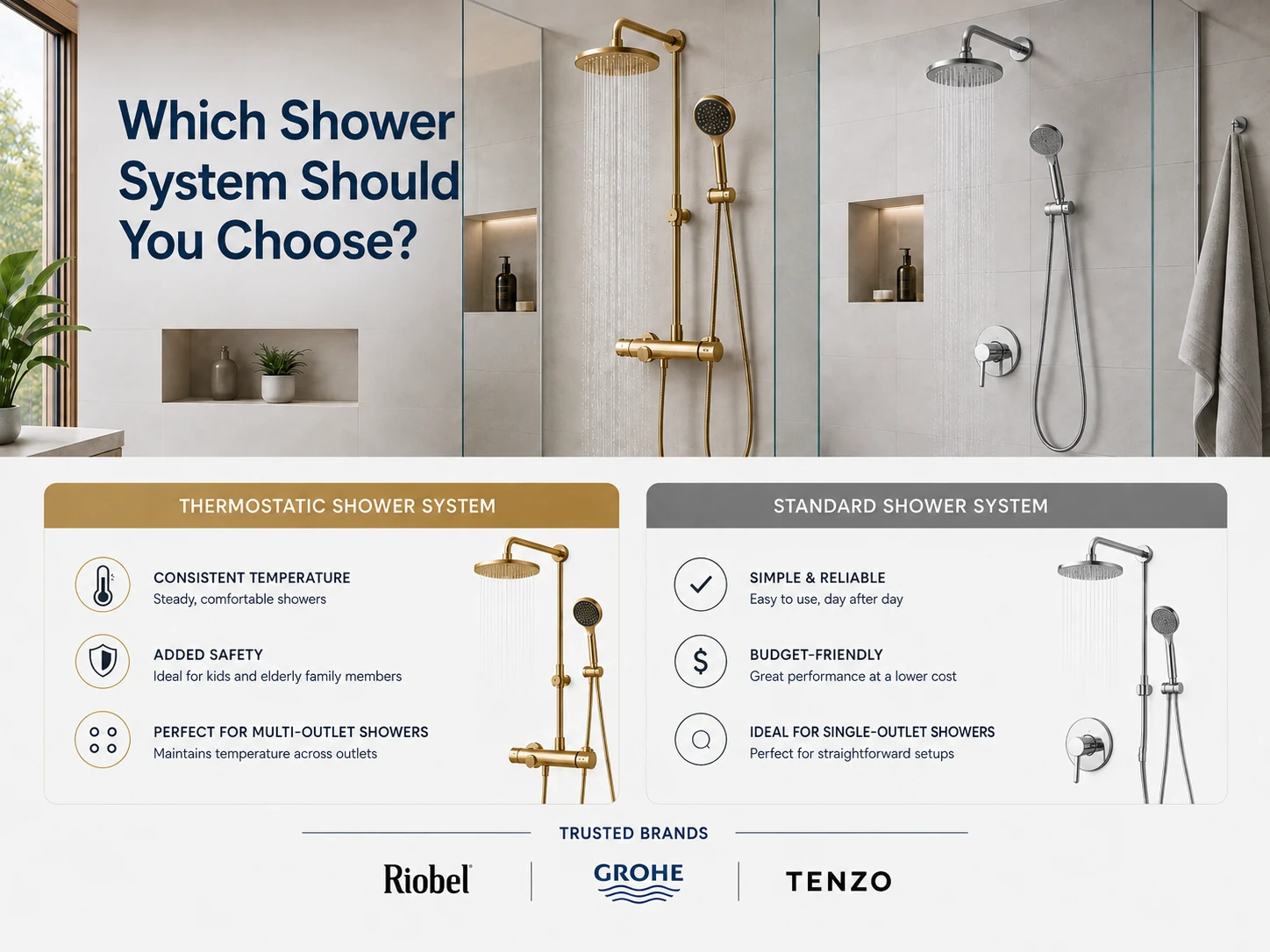
Choose a thermostatic system if you want consistent temperature control, added safety for kids or elderly household members, or you’re installing a multi-outlet shower.
Choose a standard system if you have a simple single-outlet shower and want to keep costs down without sacrificing reliable everyday performance.
Add a Tenzo AirBoost shower head to either system if a stronger-feeling spray matters to you, without increasing water use.
Final Thoughts
Both shower system types can deliver a great daily shower experience — the real question is how much you value precise, automatic temperature control versus a simpler, more affordable setup. For multi-outlet showers or households with safety concerns, thermostatic is well worth the investment; for a straightforward single-outlet shower, a standard system does the job reliably. And whichever you choose, a Tenzo AirBoost shower head is worth considering if you want a noticeably stronger spray without using more water.
Shop thermostatic and standard shower systems at Bliss Bath and Kitchen, with shipping across Canada.
Frequently Asked Questions
A thermostatic system automatically maintains a set temperature regardless of pressure or temperature changes elsewhere in the house, while a standard system relies on a single manual control that can be affected by pressure fluctuations.
Yes. Thermostatic valves include built-in anti-scald protection that prevents sudden temperature spikes, making them a strong choice for households with children or elderly family members.
Yes, generally. The more complex internal valve and dual controls make thermostatic systems pricier upfront than standard pressure-balance systems.
Yes, and this is one of its biggest advantages. Thermostatic systems are well-suited to showers with a rain head, hand shower, and body sprays running together, since they maintain consistent temperature even as demand changes.
Riobel and Grohe both offer well-regarded thermostatic shower systems, including multi-outlet configurations for rain heads, hand showers, and body sprays.
Not necessarily. A single-outlet shower can run well on a standard pressure-balance valve, since there’s no competing demand from multiple outlets. A thermostatic valve becomes more valuable once you add a hand shower, body sprays, or a rain head to the mix.
AirBoost is an air-injection technology built into select Tenzo shower heads. It blends air into the water stream to make the spray feel noticeably more powerful while keeping water flow efficient, so you get a stronger-feeling shower without using more water.
It depends on your existing plumbing. In many cases a thermostatic valve can be swapped in during a bathroom renovation without major changes, but it’s worth having a licensed plumber confirm compatibility with your current setup before purchasing.